The Psychological Benefits of Decluttering: Creating a Peaceful Home Environment
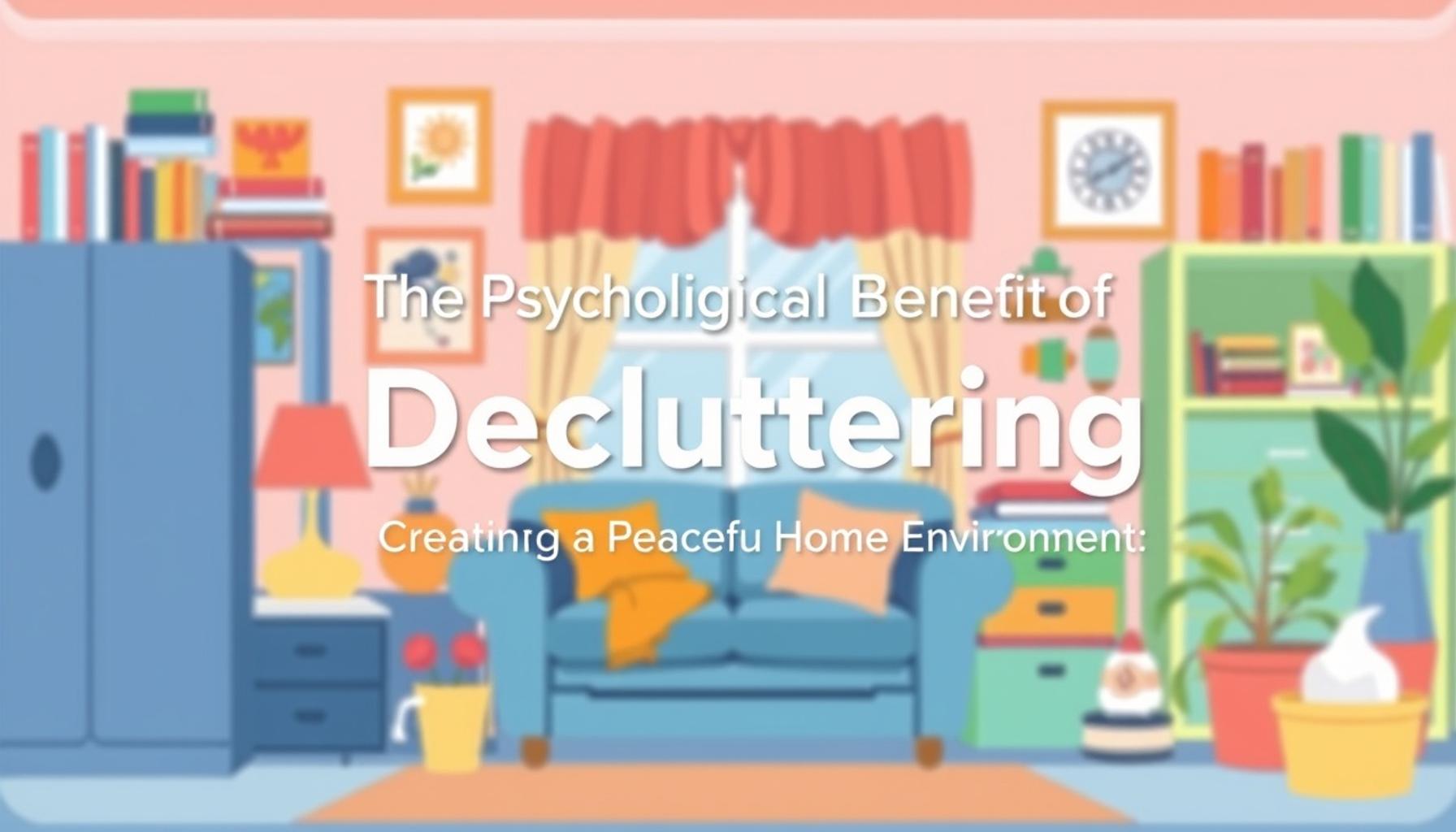
The Psychological Benefits of Decluttering
In today’s fast-paced world, the psychological benefits of decluttering are becoming increasingly recognized. A peaceful home environment does not merely represent aesthetic beauty; it encapsulates mental clarity and emotional tranquility. The impact of clutter on our mental state is profound, as numerous studies have shown that individuals who operate in disorganized environments often experience heightened levels of stress and distraction.
Decluttering offers a unique opportunity to improve your mental well-being through:
- Reduced Stress: An organized space can diminish feelings of anxiety. According to a 2010 study published in the journal Personality and Social Psychology Bulletin, participants with cluttered homes reported higher levels of cortisol, a stress hormone, compared to those in tidy environments. This indicates that a cleaner home can lead to lower stress levels and provide a sense of control in one’s life.
- Increased Focus: Less visual clutter allows for improved concentration. Cognitive psychology suggests that our brains are not equipped to handle multiple stimuli at once. By clearing unnecessary items, individuals can enhance their focus on essential tasks, ultimately boosting productivity in both personal and professional realms.
- Enhanced Mood: The process of letting go can lead to a sense of accomplishment. Many individuals report feelings of happiness and satisfaction after decluttering a space, as they embrace minimalism and intentionality in their belongings. This sense of accomplishment can improve self-esteem and encourage a positive outlook on life.
Research indicates that physical clutter in our surroundings can lead to cognitive overload. This overload may contribute to feelings of chaos, which can significantly impact our overall mood and productivity. For instance, a study by the University of California found that women who described their homes as cluttered or full of unfinished projects reported higher levels of depression and fatigue than those who felt their space was manageable.
By embracing the practice of decluttering, individuals can create a harmonious home that supports mental health and well-being. Whether through tackling a single drawer or an entire room, the process encourages mindfulness and intentional living. Practical tips, such as the “one in, one out” rule, can help sustain the organization by encouraging individuals to remove an item for every new addition to their space.
The journey towards a peaceful environment not only enhances your physical space but also nurtures your emotional landscape. As decluttering becomes more than just a trend, one can explore countless resources available online, from books to YouTube channels dedicated to minimalism and organization. Each small step taken towards decluttering can lead to a larger transformation in one’s mental landscape. Join us in uncovering how this simple act can profoundly impact both your home and mind.
DISCOVER MORE: Click here for essential tips on decluttering and organizing your home
Understanding the Effects of Clutter on Mental Health
As the saying goes, “A cluttered space is a cluttered mind.” Understanding the detrimental effects of clutter on mental health is essential in grasping the psychological benefits of decluttering. When your home is filled with disorganized possessions, the mental burden can manifest in various forms, often leading to compromised emotional well-being. A 2009 study published in the journal Environment and Behavior highlighted that individuals in chaotic living spaces experienced difficulty concentrating, irritability, and decreased overall life satisfaction.
One of the core psychological impacts of clutter is its ability to create a constant state of distraction. According to cognitive neuroscience, our brains are designed to focus on a few stimuli at a time. Excess clutter competes for attention and can lead to cognitive overload, significantly affecting our ability to concentrate on important tasks. Decluttering not only clears the physical space but also minimizes mental distractions, thus enhancing productivity and focus.
The mental benefits of decluttering can be categorized into several key areas:
- Increased Clarity: A decluttered environment fosters mental clarity. Removing unnecessary items allows individuals to better understand their priorities and make clearer decisions, unhindered by physical distractions.
- Improved Sense of Control: Taking the initiative to declutter empowers individuals, enhancing their sense of autonomy. The act of organizing one’s space can feel liberating and offers a renewed sense of purpose.
- Heightened Creativity: An organized home can stimulate creativity. With a clear and tranquil environment, individuals are more likely to engage in innovative thinking and problem-solving, as clutter does not inhibit their imaginative processes.
An important factor to consider is the emotional tie we have to our possessions. Clutter often represents unfulfilled goals, unresolved emotions, or memories we find challenging to let go of. A 2015 study by the American Psychological Association found that high levels of emotional attachment to items can contribute to difficulty decluttering and can perpetuate feelings of guilt or anxiety. Recognizing this emotional connection is crucial, as parting with items can often require not only a physical but also an emotional process.
Furthermore, the act of decluttering can introduce the practice of mindfulness into one’s routine. Approaching decluttering with intention allows individuals to reflect on what truly matters to them, fostering a deeper connection to their home environment. This awareness can promote a sense of being present, creating peace and tranquility within a once chaotic space.
As we delve deeper into the myriad advantages of decluttering, it is essential to acknowledge that the psychology behind our living spaces is complex. A clean, organized home does not only visually enhance our surroundings but substantially contributes to our mental health in ways that many may overlook. Embracing the decluttering process can lead to an emotional and psychological rebirth, paving the way for a truly peaceful home environment.
| Category | Benefits |
|---|---|
| Reduced Stress Levels | Cleaning up your space promotes mental clarity, leading to reduced anxiety. |
| Increased Focus | A clean environment can enhance your ability to concentrate on tasks. |
Decluttering your home can have profound psychological benefits that contribute to creating a peaceful living environment. As tangible clutter is removed, individuals often experience a sense of liberation that positively influences their mental well-being. Research suggests that a disorganized home is linked with Higher levels of stress, reinforcing the need for a decluttered space. The process can invoke feelings of accomplishment, as each item organized contributes to a larger goal, fostering a sense of control over one’s surroundings. Furthermore, removing excess belongings encourages a mindful approach to what you choose to keep, helping to promote a feeling of security and stability within the home. This deliberate curation of personal space can lead individuals to reconnect with their emotions, establishing a harmonious atmosphere conducive to productivity and relaxation. Additionally, studies reveal that individuals within serene environments report heightened creativity and enhanced problem-solving skills, suggesting that a decluttered space not only calms the mind but actively engages it, paving the way for increased creativity and engagement in daily activities. Unveiling the deep connection between our surroundings and our mental state, decluttering provides an accessible path to achieving psychological well-being.
DIVE DEEPER: Click here to unlock essential tips
Transforming Your Mind Through a Decluttered Space
Beyond improving clarity and control, decluttering carries profound psychological benefits that extend into overall well-being. Studies emphasize how organized environments can lead to reduced stress levels, better sleep quality, and enhanced emotional resilience. According to research conducted by the National Sleep Foundation, cluttered and chaotic environments can negatively impact the ability to relax, making it more difficult to unwind at the end of the day. Clean, organized spaces, conversely, promote feelings of serenity, ensuring restful nights and rejuvenating days.
Moreover, engaging in the decluttering process can heighten feelings of satisfaction and achievement. The act of sorting through belongings, deciding what to keep, donate, or discard, leads to a sense of accomplishment. Each item removed from an environment signifies progress—a testament to one’s ability to take actionable steps toward improvement. This sense of achievement can amplify self-esteem, which is essential for good mental health.
Additionally, decluttering encourages a healthy relationship with material possessions. In a society where consumerism often dictates lifestyle, the act of letting go fosters a more mindful approach to consumption. Individuals learn to evaluate their needs versus wants, which can lead to more intentional living. Grasping the difference between functional and sentimental items can reshape priorities, minimizing anxiety that often arises from the pressure to accumulate more. Investing in fewer, more meaningful items can evoke satisfaction as individuals curate spaces that reflect their values and aspirations.
As families navigate the hectic pace of modern life, clutter can become a physical manifestation of accumulated stress and unresolved responsibilities. A study from the Journal of Environmental Psychology found that a cluttered environment exacerbates feelings of anxiety and overwhelm—leading to a vicious cycle where emotional burdens beget more disorderly spaces. Thus, decluttering can be seen as a therapeutic practice, allowing individuals to reclaim their environments and, in turn, their mental health.
The emotional toll of disarray can also be reflected in relationships. Cluttered spaces can breed tension among family members or roommates, as unresolved differences around organization and respect for shared spaces can escalate into conflict. Creating a peaceful home environment through decluttering not only supports personal wellbeing but can also facilitate healthier interpersonal dynamics. When all members of a household contribute to maintaining an organized space, it fosters teamwork, communication, and mutual respect.
Incorporating decluttering into regular routines can also serve as a form of self-care. Just as one might schedule time for exercise or relaxation, setting aside time for decluttering exercises mindfulness and self-reflection. This practice encourages individuals to connect with their emotional states and assess the roles their belongings play in their lives. As physical spaces become more orderly, mental states often follow suit, enhancing overall life satisfaction.
Lastly, embracing decluttering as a lifestyle choice can introduce a sense of purpose and direction. As individuals cultivate environments that reflect their true selves, they become empowered to pursue passions and interests that may have been suffocated under the weight of excess. Such transformational experiences can ultimately lead to increased happiness and fulfillment.
DISCOVER MORE: Click here for essential tips on decluttering
Embracing the Clarity of Minimalism
In conclusion, the journey towards a peaceful home environment through decluttering serves as more than just a way to tidily arrange our belongings; it is a powerful psychological catalyst that fosters emotional resilience and overall well-being. As explored throughout this article, maintaining organized spaces not only alleviates stress and anxiety but also enhances sleep quality and promotes continuous mental clarity. By regularly engaging in decluttering, individuals can experience heightened self-esteem and a profound sense of accomplishment, transforming their living spaces into reflections of their true selves.
The psychological benefits extend beyond the individual, positively impacting family dynamics and interpersonal relationships. As households come together to maintain organization, principles of teamwork and communication flourish. In a culture often defined by excess, the practice of letting go cultivates a mindful relationship with possessions, encouraging intentional living that values quality over quantity.
As you embark on your own decluttering journey, consider setting aside dedicated time for this transformative process as a form of self-care. Embrace it as an opportunity for self-discovery, reflection, and ultimately, liberation from the burdens of chaos. Allow your home to become a sanctuary that fosters creativity, serenity, and presence. The psychological benefits of decluttering are manifold, providing a pathway to not just a more orderly environment, but to a life enriched with purpose and inner peace.